


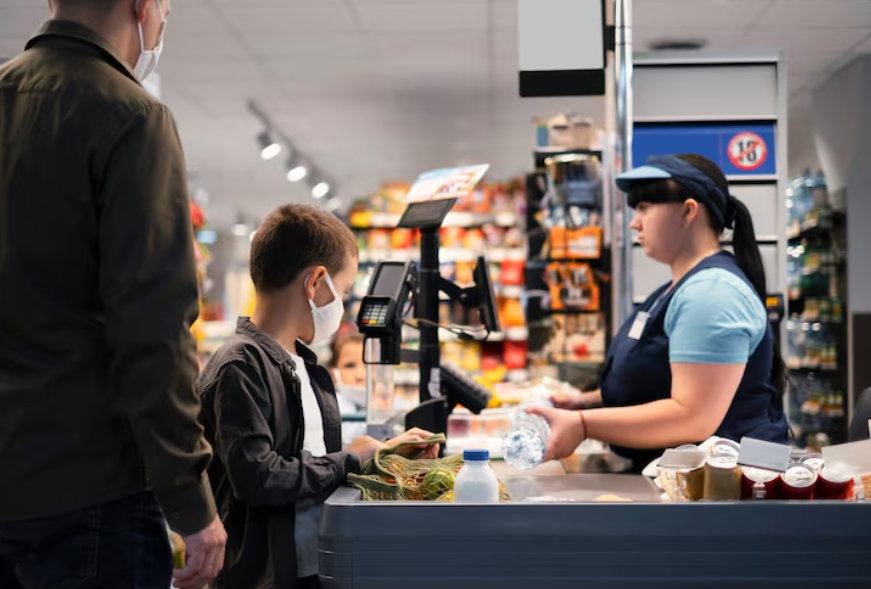
In today’s highly competitive retail sector, gaining insight into how customers move through, browse and interact with your store is more crucial than ever. Traditional sales numbers and reports can show you what people bought, but that data alone does not provide insight into the reasons behind those purchase decisions — or why others passed up your goods. Now enter the contemporary traffic counter and analytics software for retail. Combined, they enable store owners to make data-informed decisions that optimize operations, increase conversions and improve the customer experience.
The Increasing Demand for Insights on Customer Behavior
Changing customer expectations place demands on retailers in all sectors. And with online shopping becoming more convenient and personalized, physical stores must provide experiences that feel more specifically tailored. To do this, they need to access accurate data — not “educated guesses,” she says.
Actual footfall, peak hours and customer flow patterns can be measured in store with the help of a traffic counter.” Complemented with analytics software for retail, the information is even more powerful, revealing deeper behavioral insights, performance trends you can exploit and strategies to implement.
What is a traffic counter and how do they work?
A traffic counter is a piece of technology that enables a retailer to count how many people enter, leave or pass through parts of its physical store. These technologies incorporate sensors, infrared beams thermal imaging, AI vision technology or video analytics to offer an accurate count of the people entering a store.
Today’s traffic counters do more than count people — they help retailers learn:
1. How shoppers navigate around different areas of the store
2. How much time they spend in certain places
3. Which offers are getting engaged with the most
4. Overall shop occupation at any one time
But the data in practice becomes far more useful when tied into analytics software for retail, which helps businesses turn numbers on a screen into actual insight.
Why Traffic Counters Are More Essential Than Ever
“With the way retail is getting more competitive, there’s a need for smarter decisions, and you can only make those if the data is more accurate,” he said. A traffic counter helps retailers measure success beyond sales figures. For instance, if there are a lot of people walking into the store but not many sales, it’s perhaps a sign that your product placement or pricing or customer service is lacking. If conversion rates abruptly fall, that could be a sign of an operational problem.
Retailers also count their traffic:
1. Identify peak shopping times
2. Properly staff for improved customer service
3. Keep an eye on any seasonal or advertising-driven traffic waves
4. Learn How Store Layout Directs Shopper Movement
In essence, traffic counters enable retailers to real-time monitor what’s happening inside the store.
Rendering Data Actionable: The Role of Analytics Software for Retail
Even though the traffic counter establishes the pile of raw data, retail people counting software turns that raw data into a strategic tool. The software looks for trends, patterns and correlations that human observation might miss.
This is the sort of thing that analytics software can do:
1. Compare footfall with Into real sales to Determine conversion
2. Detection of slow and hot zones in the store
3. Though customer behaviour forecasting from historical data
4. Provide real-time dashboards for managers
5. Enhance promotional, aisle and/or product placement decision making
With analytics application for retail integrated with traffic counting solutions, retailers can analyze end-to-end customer patterning—from entering to leaving.
The Advantages of Integrating Traffic Counters with Retail Analytics
By combining a footfall counter with analytics software for retail, merchants get access to numerous advantages:
Better Store Layouts
Traffic flow patterns indicate where people are paying attention and where they are not. Merchants have the ability to fine-tune what is presented on displays.
Boosted Conversion Rates
If there are customers coming into the store but not buying, analytics can identify what’s going wrong — from placement of products to availability of staff.
Improved Staffing Decisions
Just targeting peak footfall hours make sure staff are rostered accordingly, minimizing wait time and improving customer service.
Data-Driven Marketing
Promotional performance can be tracked in real time — aiding retailers in figuring out what really works.
Enhanced Customer Experience
Armed with a better understanding of how people act, stores can build ever-smoother and more intuitive shopping experiences that will delight customers.
Real-World Retail Examples Across Different Sectors
The merger of a traffic counter with analytics software for retail is disrupting multiple domains:
Fashion shops: They can measure which new lines get the most footfall.
Supermarkets: Assist buyers in instant product placement decisions using aisle heat maps.
Electronics Stores: Monitor interactions in demo areas.
Shopping Centre: Monitor the entrance and exit flows for tenant control.
QSRs & Cafés: Track customer flow from ordering to sitting.
Whatever the sector, the learnings empower retailers to work smarter and serve their customers better.
Conclusion
Traditional retailers can’t base everything on transactions. A people counter is a vital piece of foot traffic data, and analytics software for retail turns that data into actionable insights which can be used for future strategy decisions. Combined, they enable retailers to efficiently decide on the locations of new stores, or optimize existing store networks, boost conversion rates and optimize staff planning whilst improving the shopping experience for customers. In an era of data-driven business decisions, these tools have been critical to the growth of retail.
FAQs
1. What is a traffic counter for retail?
A traffic counter is a technology device that counts how many customers enter, exit, and pass through a retail store.
2. How does analytics software for retail help to increase sales?
It processes customer traffic and behavior, enabling retailers to optimize layouts, increase conversion rates and make smarter marketing decisions.
3. Are traffic counters useful to small businesses?
Yes. Even mom and pop stores receive new information about peak times, customer flow, staff management.
4. Can traffic counters identify specific shoppers?
The systems in current use monitor movement anonymously, picking up behaviour rather than personal identity.
5. Why mix the two ingredients of traffic counters and analytics software for retail?
Combined, they provide a full view — from footfall to conversions-— helping retailers use data to make business decisions.
